Enterprise SaaS · 2026
AI Agent Gantt
Designing trust in agentic AI - how I helped a telecom CRM anticipate project delays and act on them without losing human control.
Enterprise SaaS · 2026
Designing trust in agentic AI - how I helped a telecom CRM anticipate project delays and act on them without losing human control.
Timeline
Q1 2026
Team
Product design, engineering, QA
My Role
End-to-end product design
Platform
Web - Enterprise SaaS
A telecom CRM serving enterprise B2B clients. When severe weather threatened an SLA breach, the agent detected it - and helped the project manager fix it, without ever acting without permission.
Enterprise telecom orders span dozens of installation milestones across multiple sites - fiber installations, circuit activations, equipment deliveries, billing starts. A delay anywhere cascades silently through the entire plan. Operations managers were reviewing this through manual status checks: opening individual records, cross-referencing timelines, relying on memory to catch risks. By the time a problem surfaced, it was already a breach.
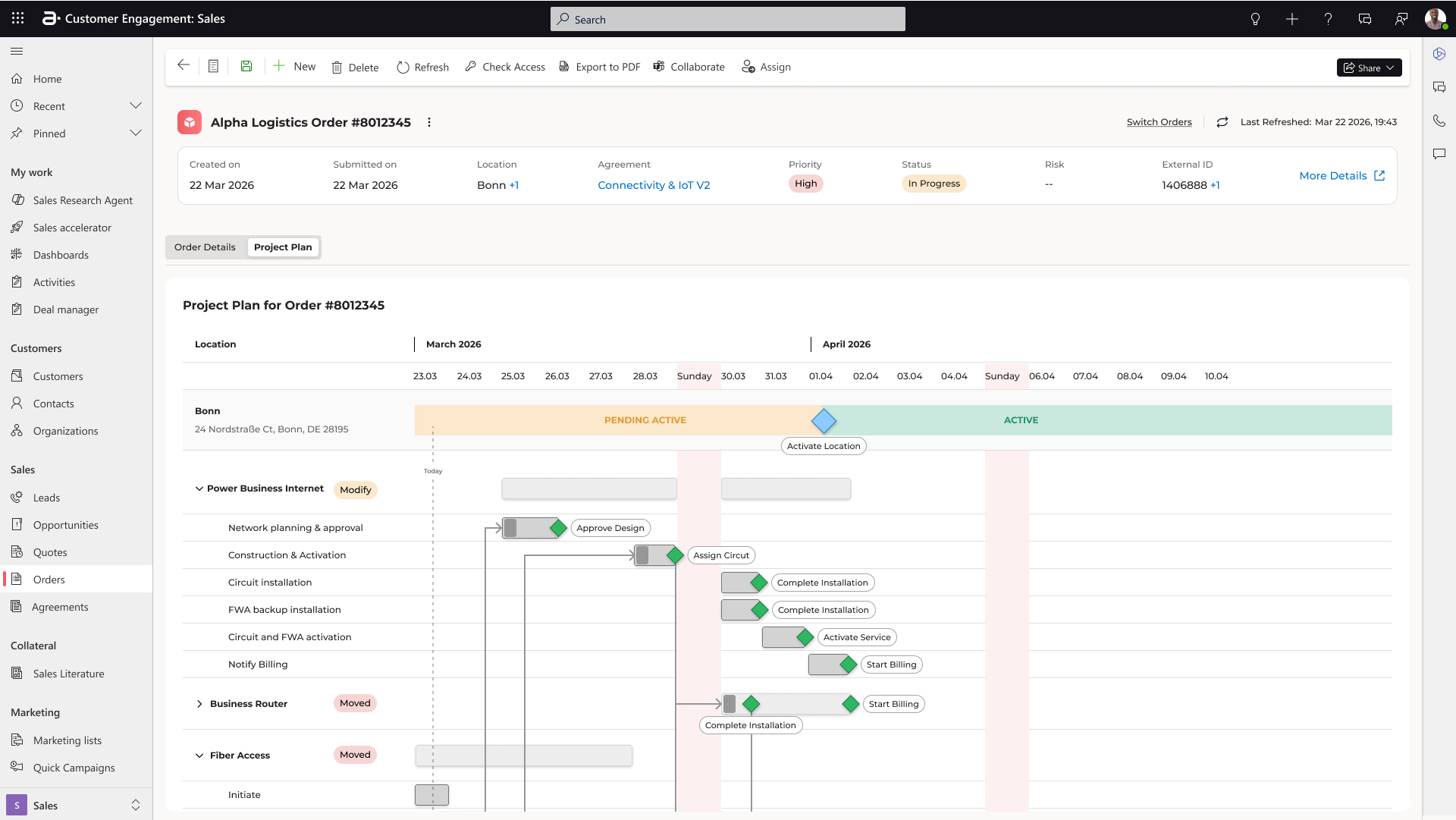
The Gantt chart showed the plan. It just didn't tell you when the plan was in trouble.
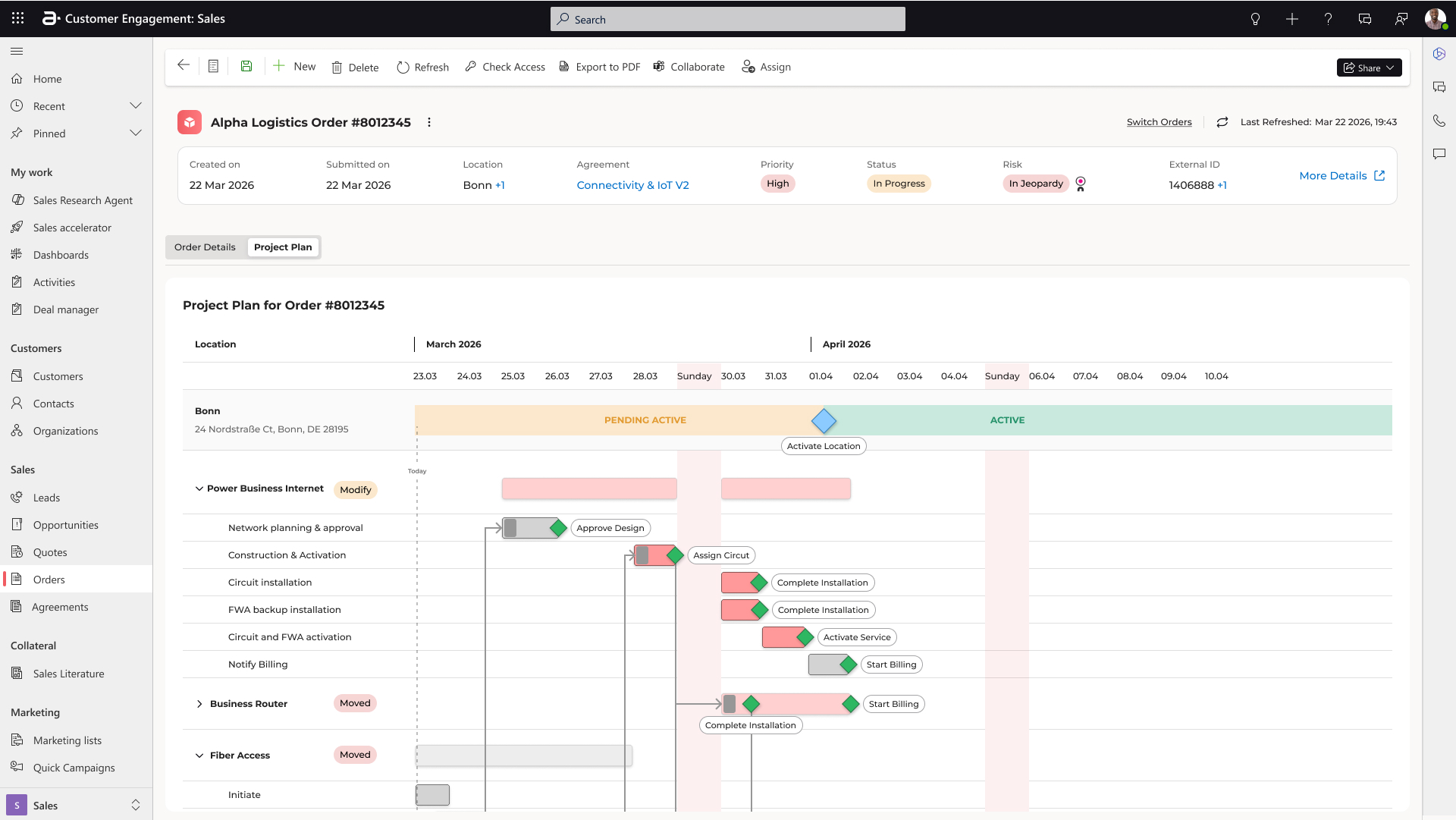
The project plan before any alert. Everything looks normal.
A push notification from Teams kicked off a chain of agent actions behind the scenes. The user doesn't see the orchestration - they see only the outcome: a clear, structured alert on the Gantt bar itself, and a conversational summary in the agent panel.
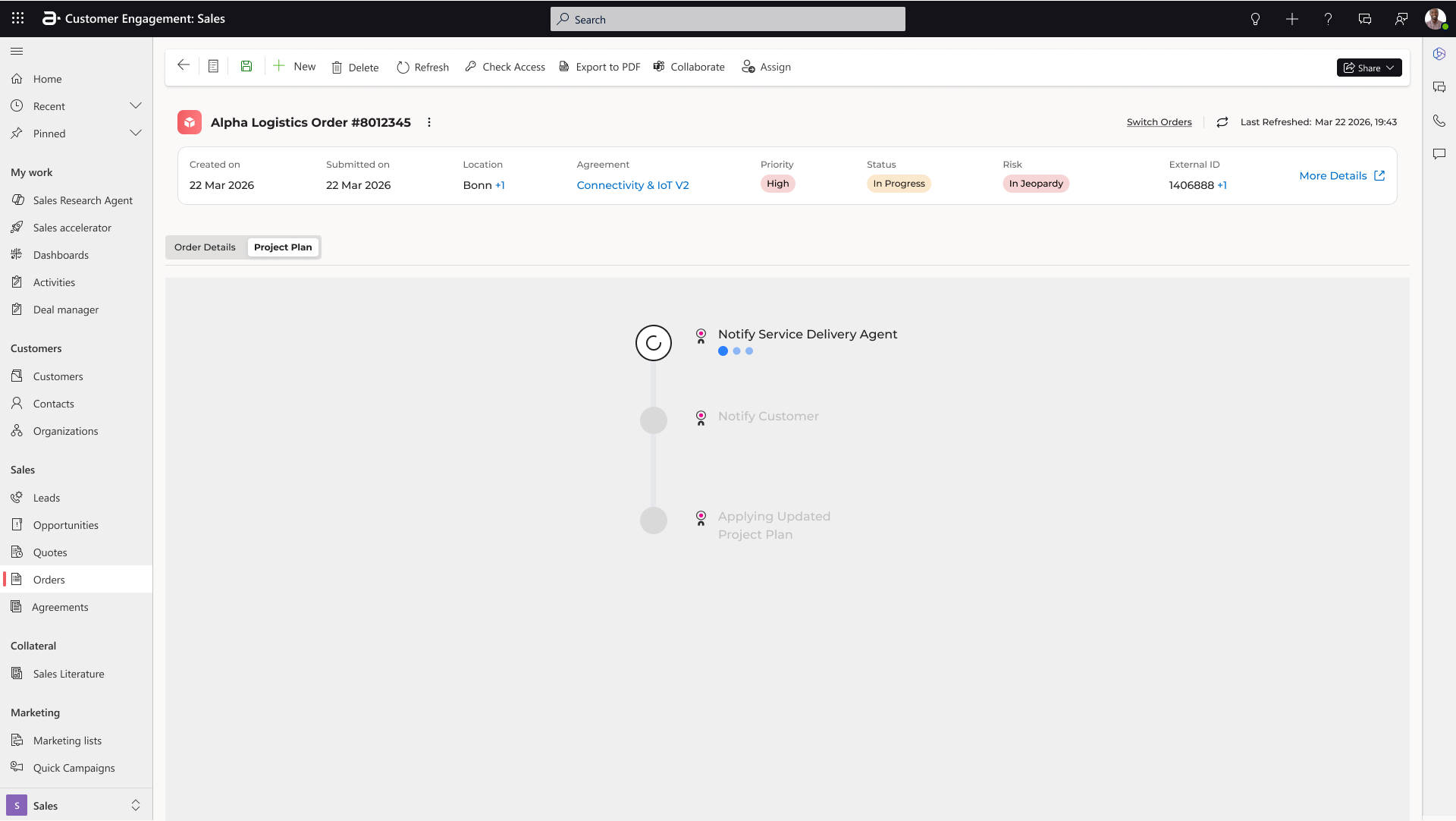
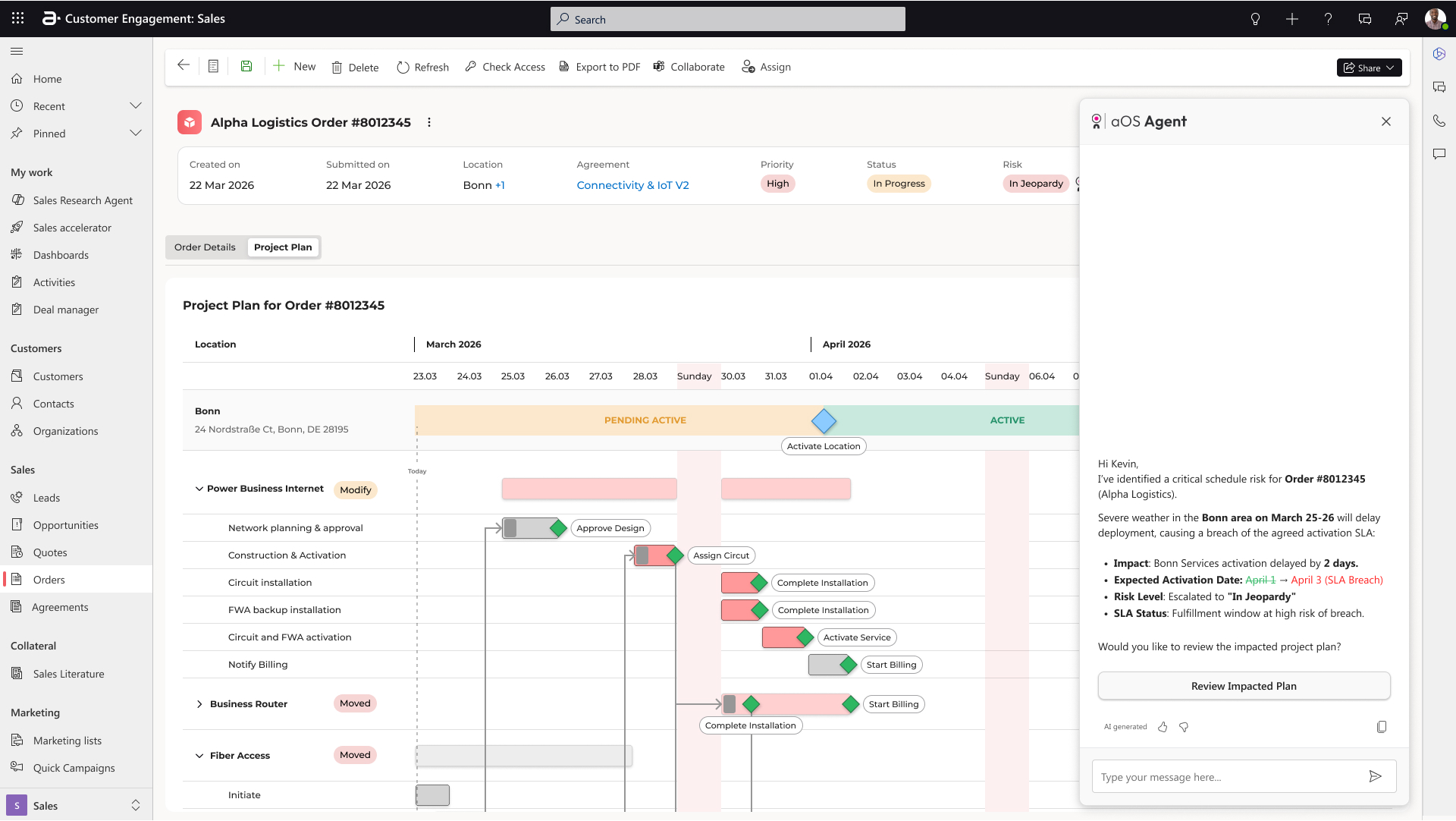
Left: the agent orchestration flow running behind the scenes. Right: what the user sees - a clear alert on the specific Gantt bar, with severity and context already surfaced.
The central design challenge wasn't just detecting risk - it was earning the right to act on it. The agent doesn't jump to solutions. It explains: which tasks are delayed, why, what the SLA impact is. Then it asks: "Would you like me to suggest mitigation options?"
Every capability the AI has is gated behind a human decision. Review Impacted Plan → Suggest Mitigation → Apply Mitigations. Each step requires explicit confirmation. This is the design choice I'm most proud of.
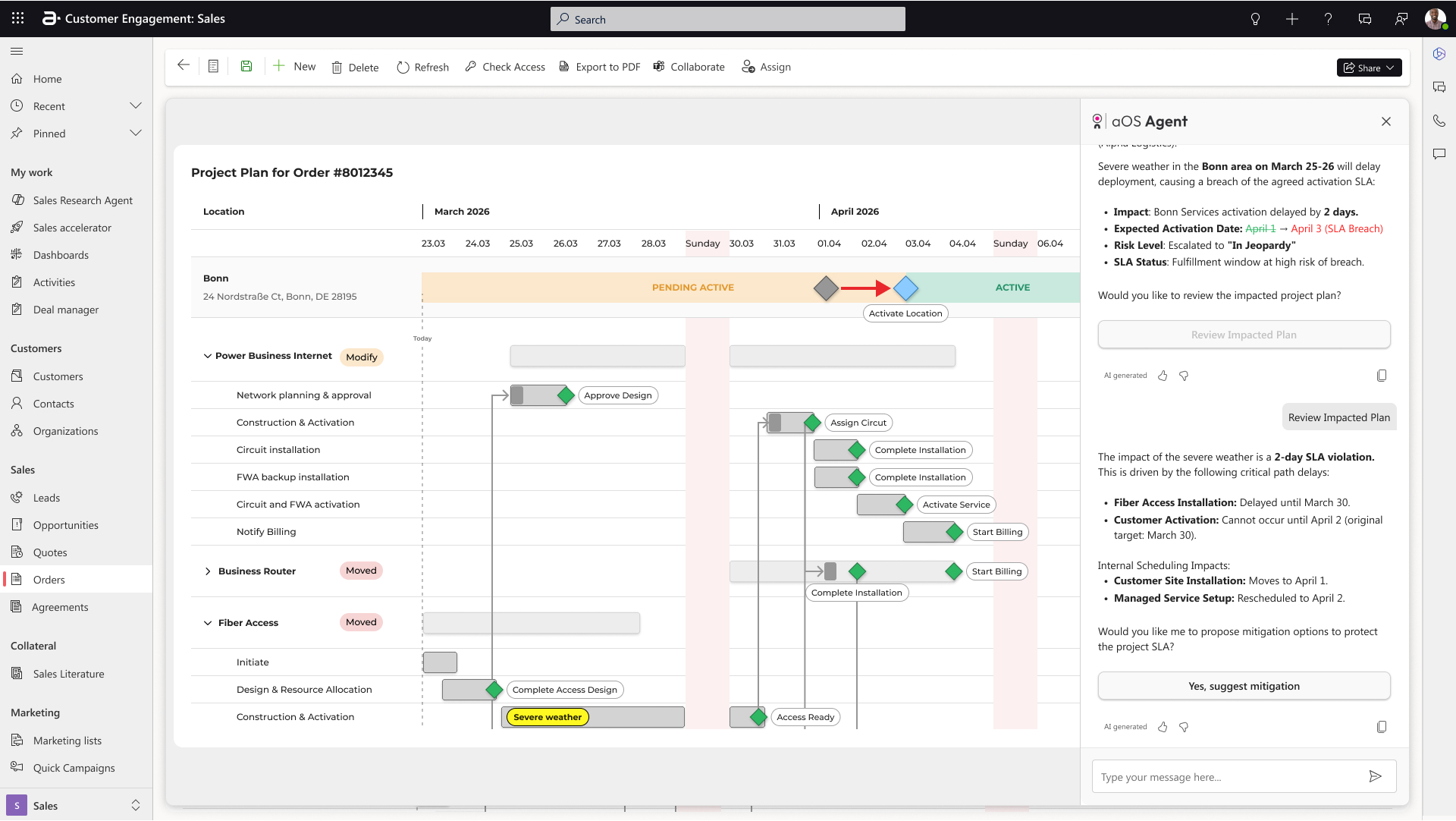
The agent highlights the at-risk Gantt bars and explains root cause before asking for any action.
When the agent contacts a sub-agent - like the Service Delivery Agent to validate feasibility - the handoff is shown explicitly. Users see what's happening and who the agent is talking to, before the response arrives. Not a spinner. Not a generic "thinking..." message. Actual work, made visible.
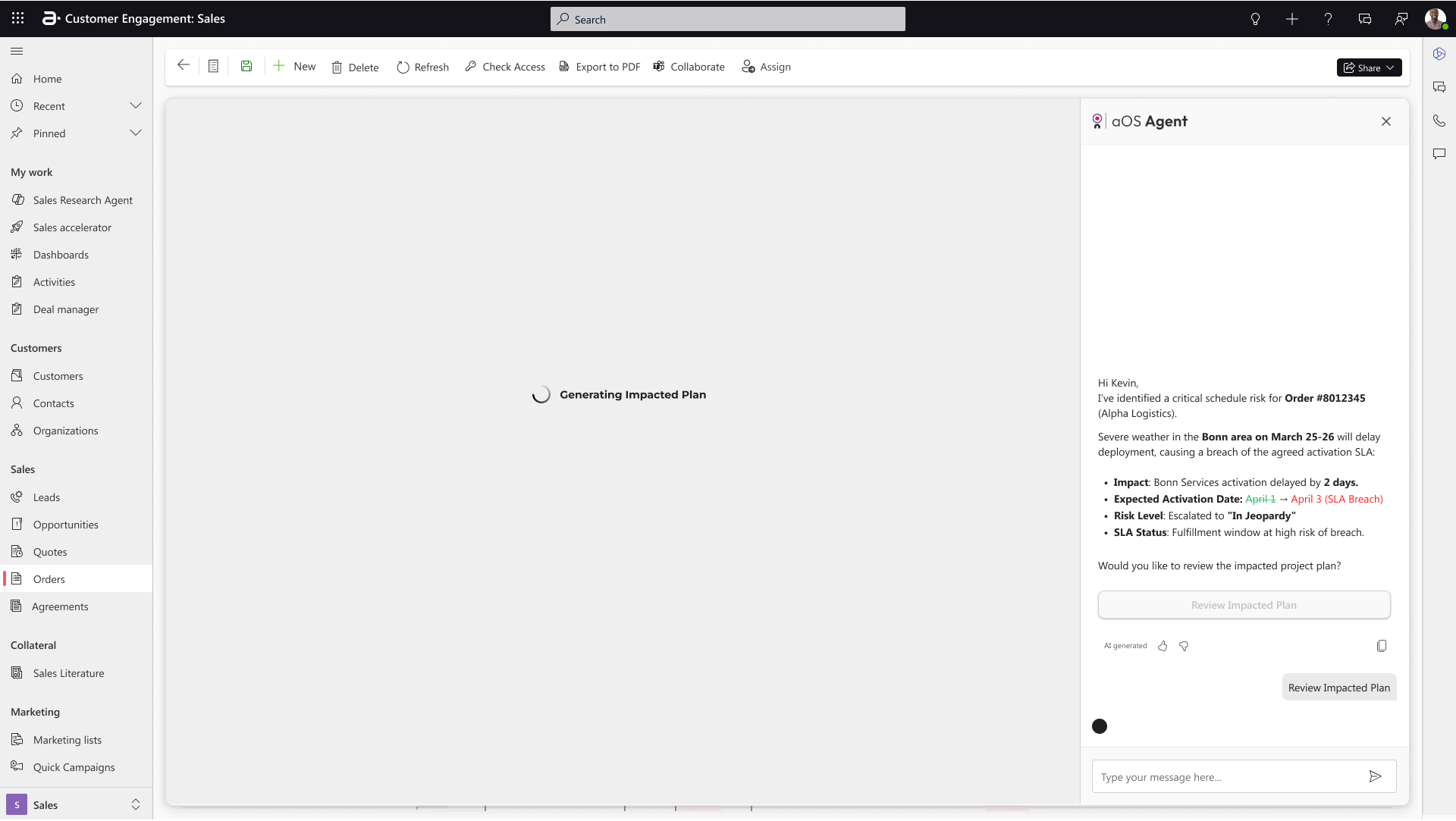
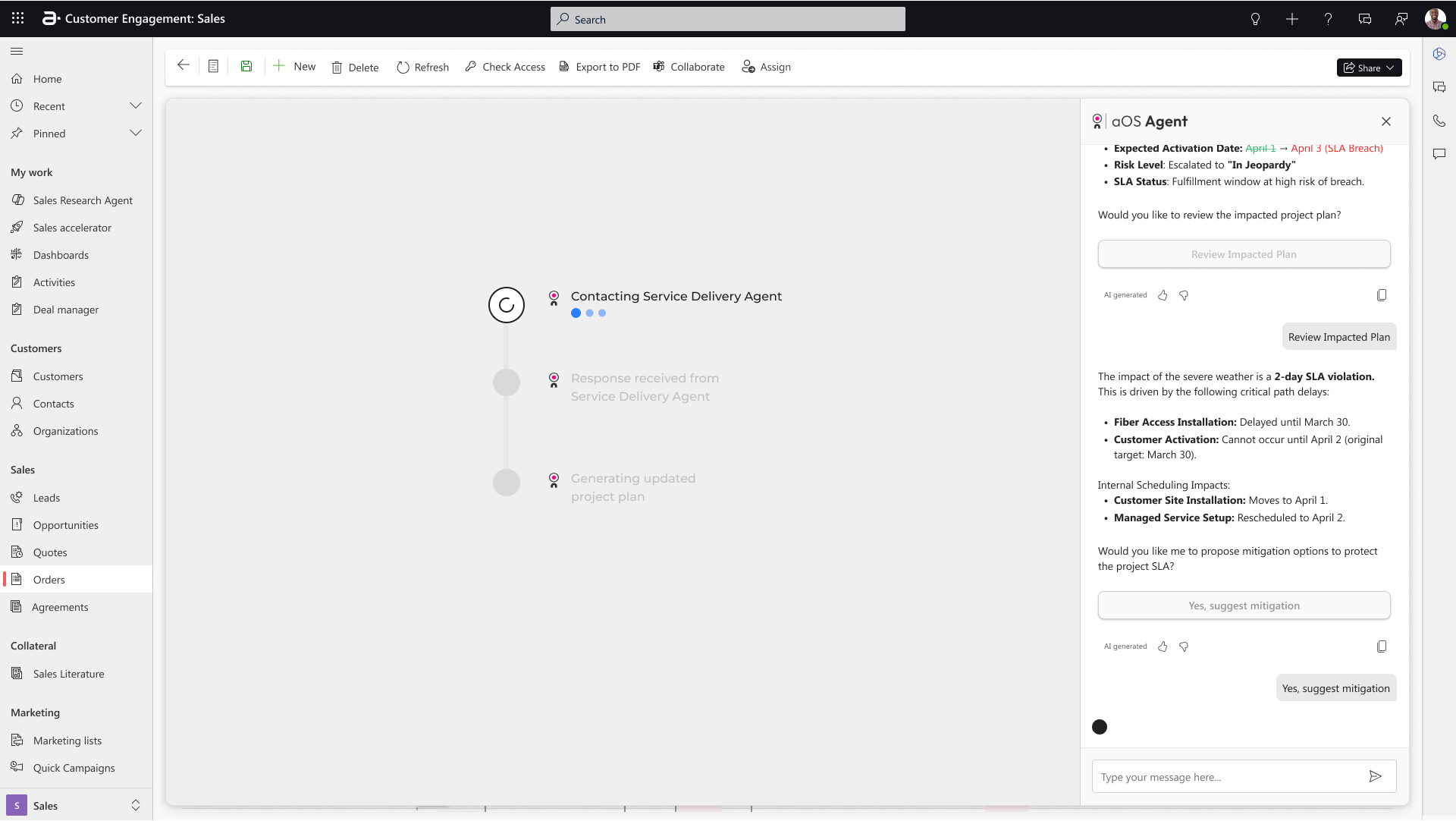
Loading states that explain what's actually happening. Users know which agent is working and why.
The agent proposes concrete, specific actions - add resources to a task, start a dependency one day earlier. It shows the projected outcome before the user commits. The plan doesn't update until the user confirms. Once confirmed, the Gantt reflects the changes in real time.
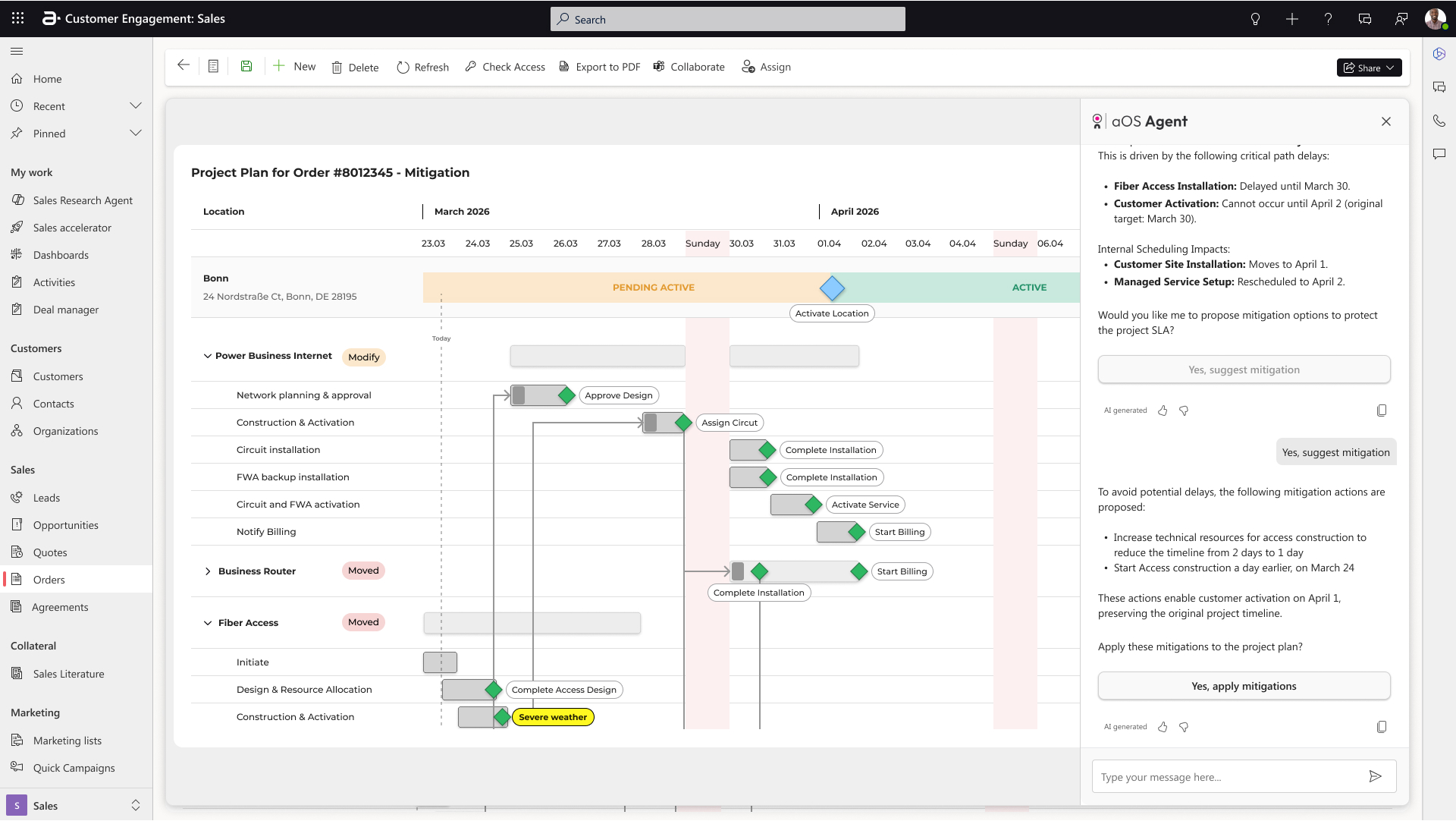
Two concrete mitigations, each with projected schedule outcome. The user decides.
From "In Jeopardy" to cleared - in a single conversation. No tickets raised, no team escalations, no missed SLA. The Gantt reflects the approved changes and the risk indicator disappears.
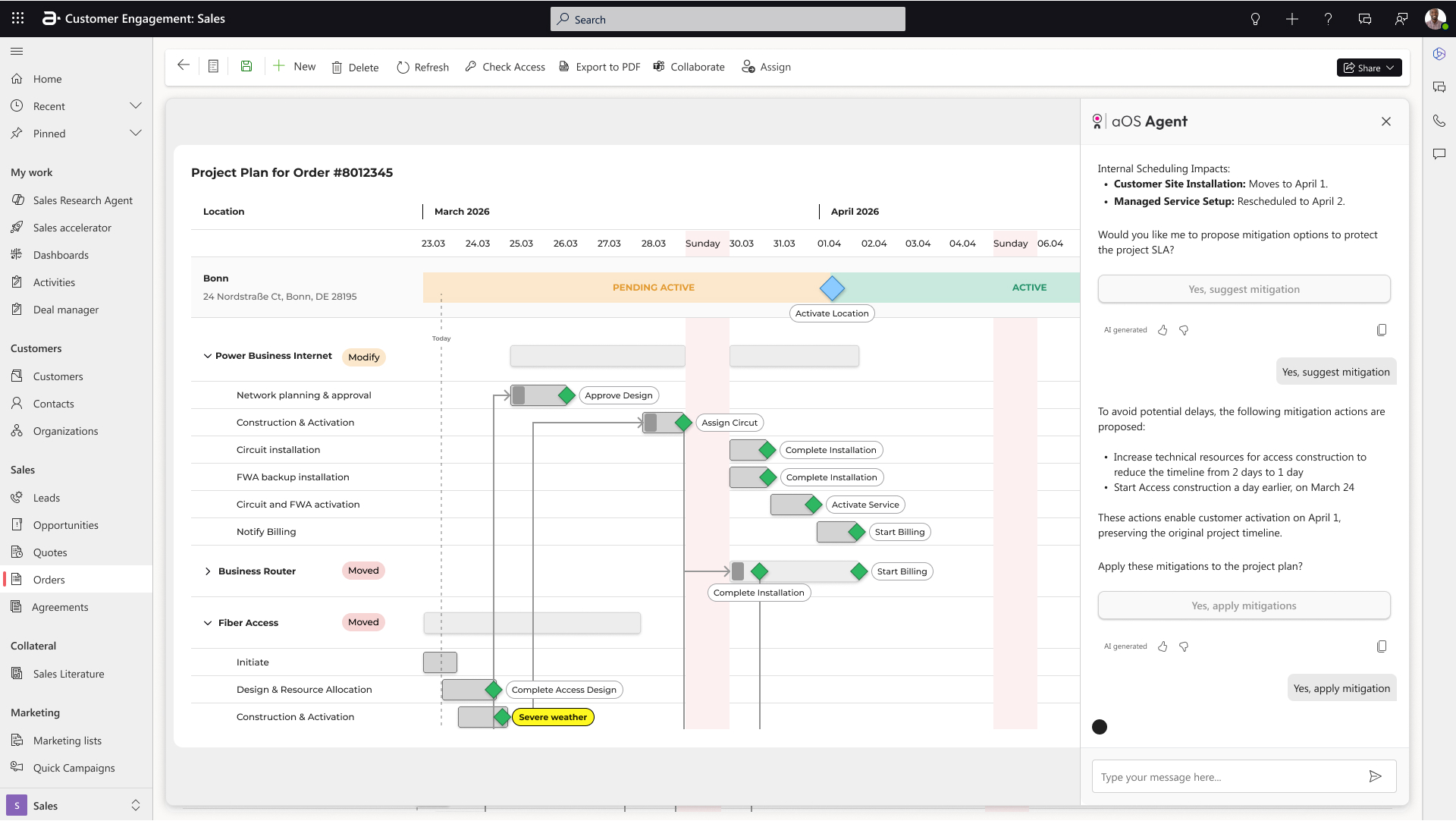
Before and after. The same project plan, 10 minutes apart.
Every component in the agent panel was designed around a single question: what does the user need to make a confident decision right now? The confirmation buttons, the typography of the chat, the order details sidebar - each element either supports a decision or gets out of the way.
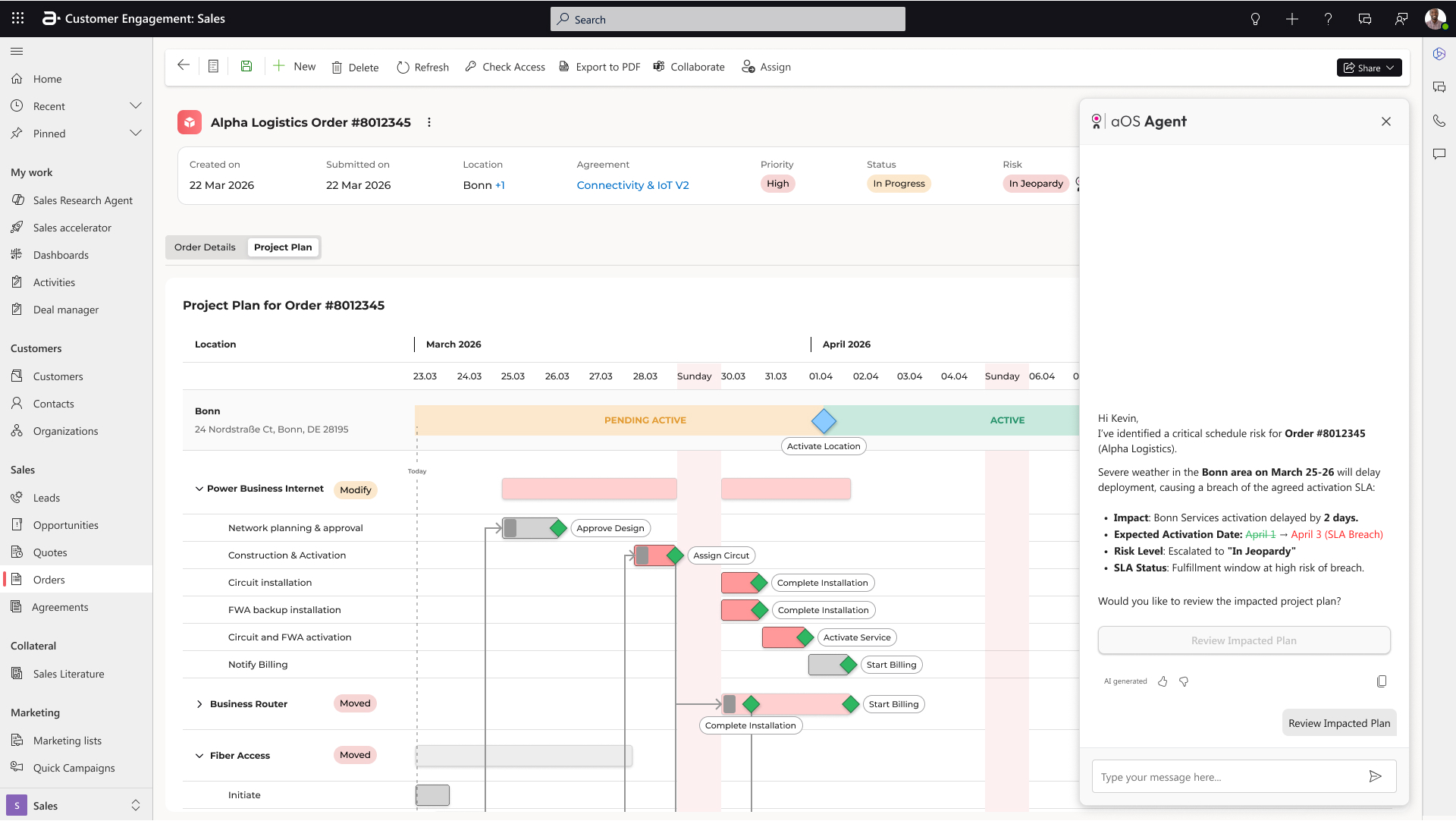
Confirmation controls and the structured risk summary that supports each decision.
A modal interrupts focus at precisely the moment the user needs Gantt context most. The side panel is always accessible but only takes over the conversation when there is something worth saying. It treats the Gantt as the source of truth and positions the agent as commentary on top of it - not a replacement for it.
The agent always shows its reasoning before asking for a decision: here is the risk, here is why, here is the critical path impact, here is what I propose. Each step in the chain requires an explicit confirmation. This is not conversational AI - it is a decision-support system designed around a specific operational workflow.
When the aOS Agent delegates to a specialized sub-agent to validate feasibility, the handoff is shown as a lightweight process visualization. Users see the delegation happening before the response arrives. This prevents the black box problem: AI that produces results with no evidence of how, which erodes trust precisely when trust matters most.
The aOS Agent shifted operations teams from reactive fire-fighting to proactive risk management. SLA breaches that previously required manually cross-referencing dozens of order records became surfaced automatically, with the path to resolution embedded in the same view as the plan being managed. The feature introduced a pattern for AI-assisted operations that became a reference point for subsequent agent features across the platform.
I'd invest more in the quiet state - how the agent communicates when there's nothing to report. The current design is optimized for the alert moment; the experience during normal operations received less attention. A version that actively communicates confidence ("All milestones on track") would help operators build trust during the long stretches when nothing is wrong, not just in the moments when the agent intervenes. Trust is built across the whole experience, not only at the high-stakes interactions.